How Is Hemp Flower Made? From Seed to Shelf
By Gashouse
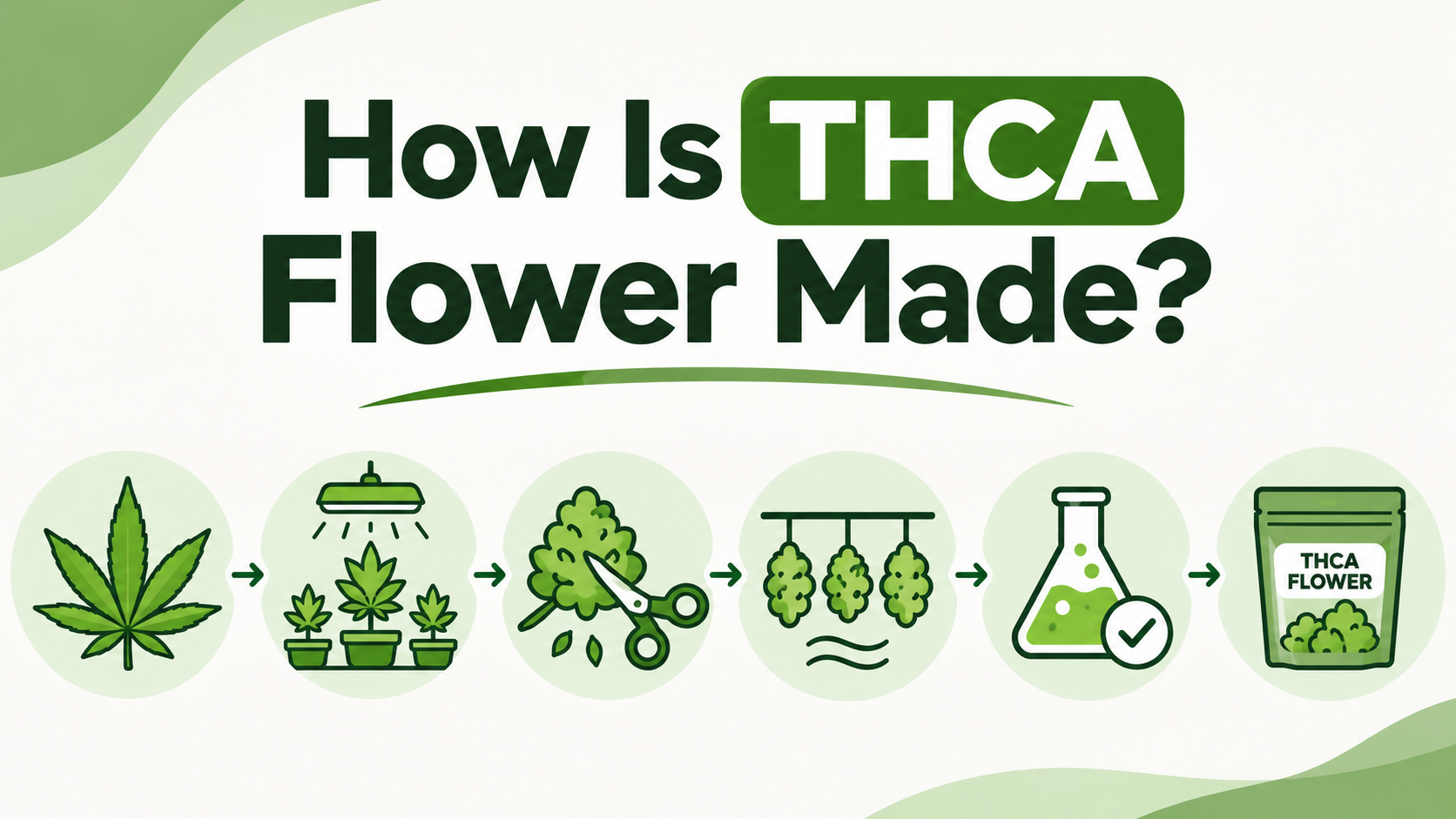
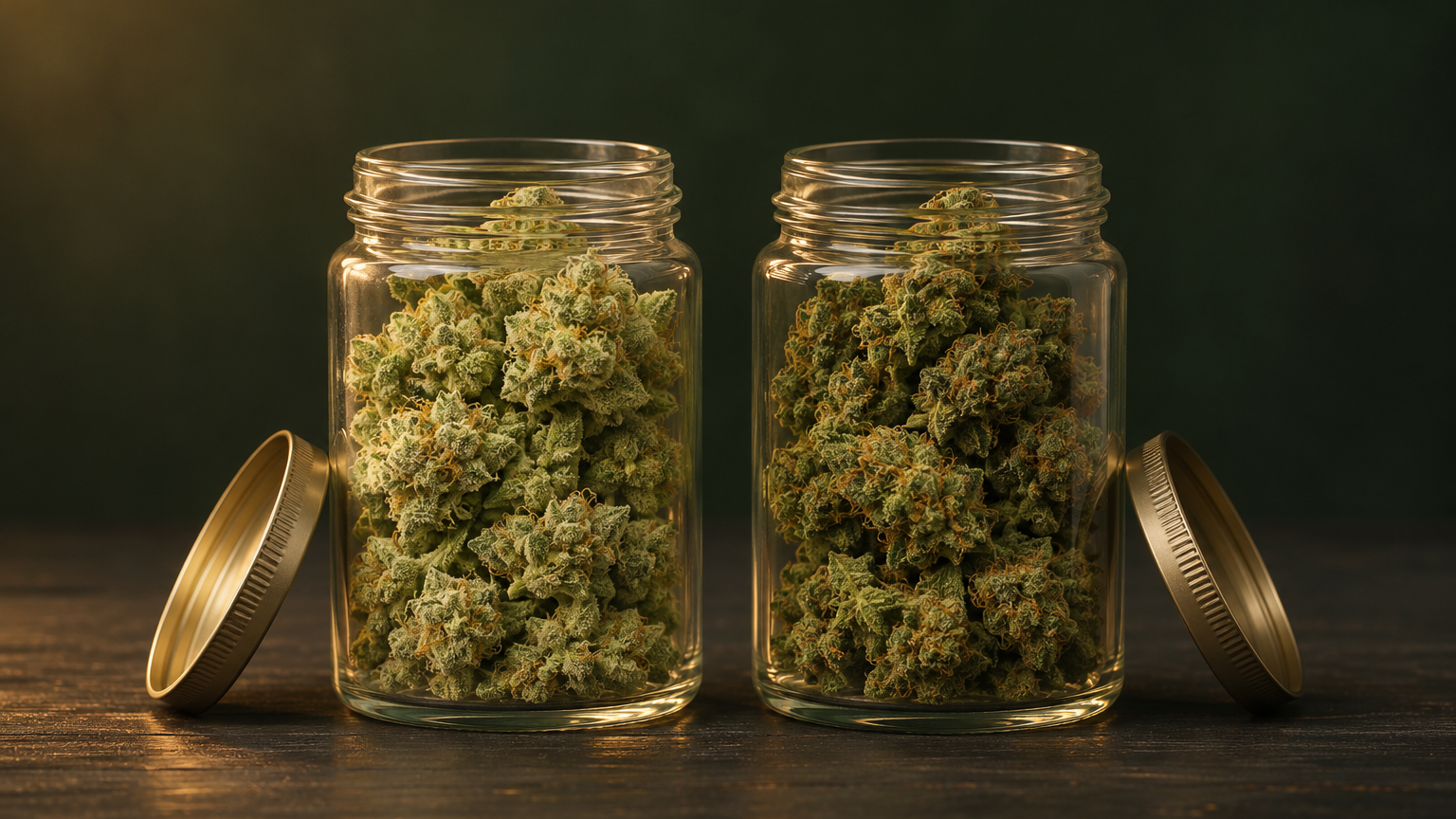
Hemp flower isn't made in a lab. It's grown. The hemp plant builds hemp on its own, growers dry and cure the buds, and a lab tests the batch. Nothing has to be added for flower to be "Hemp flower." Some products are sprayed or coated after harvest, though, so it pays to know what to ask.
Quick answer
- The plant makes cannabinoids. An enzyme in the plant converts a precursor called CBGA into cannabinoids, and the plant stores it in tiny resin glands.
- Growers shape the outcome. Genetics, a female-only crop, light, and harvest timing all affect the finished flower.
- Drying and curing preserve it. In one study of CBD-type hemp, hot-air drying converted noticeably more of the acid form than slow drying did. That suggests gentle drying and cool, dark storage help protect hemp flower and terpenes.
- A lab report proves it. A certificate of analysis (COA) shows what is in the batch. Ask for the one that matches the batch you are buying.
In this post
- Where hemp comes from
- Growing hemp flower
- Harvest, drying and curing
- Testing and the COA
- What about sprayed or "enhanced" flower?
- Flower vs. diamonds and other concentrates
- Is it legal in Texas right now?
- Quick questions
Where Hemp Comes From
Hemp is a natural product of the cannabis plant. An enzyme called cannabinoid synthase turns a precursor molecule, CBGA, into cannabinoids. Research on the enzyme found that it sits in the storage cavity of the plant's glandular trichomes, the tiny resin glands you see as frosty crystals on a bud.
So the hemp in flower is already there when the plant is harvested. For the chemistry of what happens when you heat it, see our guide to Hemp vs delta 9.
Growing Hemp Flower
Hemp grown for flower is a different crop from hemp grown for fiber or grain. The goal is a female plant with dense, resinous buds. In broad strokes, growers:
- Pick a cultivar. Varieties differ in cannabinoid content, terpene profile, and how long they take to mature. In University of Vermont Extension flower trials, cultivars varied by up to a month in maturity.
- Start from seed or clones. In an Illinois Extension survey, growers of high-cannabinoid hemp started from seed 63% of the time and from clones 31% of the time.
- Keep the crop female. Buds come from female plants. Feminized seed and cloning are common ways to avoid male plants, and growers watch for any that slip through.
- Control the light. Hemp is sensitive to day length. Outdoors it flowers as nights lengthen. In a greenhouse or indoors, growers can trigger flowering by shortening the light period.
- Time the harvest. Growers watch maturity and often test before cutting. The same Auburn work found that looking at trichomes alone was too inconsistent to predict cannabinoid levels, which is why pre-harvest lab tests matter.
Indoor, greenhouse and outdoor grows all produce flower, with different trade-offs in cost, consistency and weather risk.
Harvest, Drying and Curing
After harvest the plant is cut, dried and cured. This stage matters a lot for how flower smells, tastes and keeps.
A 2025 study led by Cornell researchers compared drying and curing methods on hemp flower and found (Postharvest drying and curing study, PMC):
| Stage | Method | Result |
|---|---|---|
| Drying | Hot air, 75 °C for 8 hours | About 8.5 to 9.0% of acidic cannabinoids converted to neutral forms; lower yeast and mold (up to about 2 log) |
| Drying | Ambient, about 26 °C and 45% humidity, about 1 week | Under 0.1% converted |
| Drying | Freeze drying | Under 0.1% converted |
| Curing | 3 weeks in the dark, about 24 to 25 °C, 45% humidity, glass jars or Mylar | About 1 to 1.8% converted |
Total cannabinoids did not change significantly with the drying method or curing.
Note that this study used CBD-type hemp, not Hemp-dominant flower. The takeaway is directional: heat and time convert some of the acid form, so gentle drying and cool, dark storage help preserve hemp flower and terpenes.
Trimming is the last step: buds are trimmed, by hand or machine, to remove excess leaf.
Testing and the COA
Before hemp flower is sold, it should be tested by an accredited lab. A certificate of analysis (COA) is the report.
On a COA, look for:
- Cannabinoid percent and delta 9 THC percent. These are reported separately by many labs.
- Total THC. Commonly calculated as delta 9 THC plus 0.877 times hemp, because hemp loses mass when it converts to THC. Confirm the exact method on your lab's report.
- The batch or lot number and the testing date, so the report matches what is on the shelf.
- The safety panels: pesticides, heavy metals, microbials and, where relevant, residual solvents.
What About Sprayed or "Enhanced" Flower?
Some products are plant flower that has been coated with extracts, distillate, kief or crystals after harvest. That is different from flower where all the cannabinoids come from the plant.
Federal law is tightening here. Starting November 12, 2026, cannabinoids that the cannabis plant is not capable of naturally producing are excluded from the federal hemp definition.
Flower vs. Diamonds and Other Concentrates
Hemp flower is simply the dried and cured plant. Hemp concentrates, such as diamonds, are made differently: cannabinoids are extracted from the plant and refined, often with solvents, and hemp is then crystallized. That is a manufacturing process, not a growing one, and it is why solvent-based concentrates are tested for residual solvents.
| Attribute | Flower | Concentrates (e.g., diamonds) |
|---|---|---|
| What it is | Dried, cured plant | Extracted and refined cannabinoids |
| How it's made | Grown, dried, cured, trimmed | Extracted, often with solvents, then crystallized |
| Extra testing to ask about | Pesticides, metals, microbials | Same, plus residual solvents |
Is Hemp Flower Legal in Texas Right Now?
It is unsettled.
- Texas. A DSHS rule effective March 31, 2026 counts cannabinoids toward total THC. A court blocked it in May and an appeals court lifted that block in June. According to a plaintiff-side trade group's August update, the rules are enforceable as written while the state's appeal continues (Texas Hemp Business Council). We could not confirm any court result after August, so check the DSHS hemp page for current status.
- Federal. The new hemp definition counts total THC including hemp flower and limits finished products to 0.4 mg total THC per container. Commentary differs on exactly how hemp flower is treated once it takes effect, and Congress could act again (CRS).
| Federal change | Effective date | Source |
|---|---|---|
| Cannabinoids not naturally produced by the plant excluded from hemp | Nov 12, 2026 (not delayed) | CRS |
| Most other hemp-definition changes, including total THC | Dec 11, 2026 (delayed by Pub. L. 119-103) | CRS |
| 0.4 mg per-container limit | Not stated by CRS; expected to move with the rest | Inference |
Whatever you buy, buy from a shop that shows batch COAs, keep your receipt, and check current rules before you travel with it.
Hemp Flower: Quick Questions
Is hemp flower synthetic?
No. The cannabis plant makes cannabinoids on its own. Flower is the dried, cured plant. Concentrates and sprayed products are a different story.
How long does it take to grow?
It depends on the cultivar. Maturity varied by up to a month between cultivars in UVM trials, and growers also decide when to harvest based on testing.
Does curing change the hemp?
In a study of CBD-type hemp, hot-air drying converted noticeably more of the acid form than slow drying or freeze drying. That suggests gentler drying keeps more of it. See the table above.
How do I know the flower is tested?
Ask for the batch COA from an accredited lab and check that the lot number matches your product.
Is hemp flower legal in Texas?
Unsettled. See the legal section above and check current status before you buy.
Shop With Gas House
Both Gas House locations are open daily, 8 am to midnight, with 21+ ID checks. Browse hemp flower and pre-rolls, or ask the crew about batch testing in store.
- East Dallas: 5002 Columbia Ave, Dallas, TX 75214, (469) 559-3223 (Gas House East Dallas)
- Irving: 1335 N Belt Line Rd, Suite 7, Irving, TX 75061, (214) 470-4424 (Gas House Irving)
Ready to shop?
Lab-tested hemp, delivered or in-store.